 News has reached the site, over time, of three puzzle hunts all set within Australia. All three are primarily organised over the Internet and all three welcome online participants from around the world.
The oldest of the three is the Melbourne University Mathematics and Statistics Society’s Puzzle Hunt, hereafter the MUMS hunt, which has archives dating back to its first year in 2004. A little younger, since 2007, is the CISRA hunt, where CISRA stands for Canon Information Systems Research Australia who promote it, and the archives of the University of Sydney’s counterpart SUMS puzzle hunt date back to 2009. All three have some similarities in format, to the point where it may be useful to consider them (slight variants of) a conventional Australian format.
The Australian format generally has five rounds (known as Acts or Groups) of puzzles leading up to a single metapuzzle relying on all the previous answers. On the first day of the hunt, the first round of (normally four, though sometimes five for CISRA) puzzles is released, and each puzzle can be solved for five points. On the second day, the second round of puzzles is released, along with the first hint for each puzzle in the first round. Each second round puzzle can be solved for five points, but the value of the first round puzzles drops to four points. Similarly, on the third day, a third round of puzzles is released, valued at five points each, along with first hints for the second round of puzzles, now valued at four points each, and with second hints for the first round of puzzles, with a value that drops to three points each.
Day four sees a fourth round of puzzles and extra hints for each of the previous three rounds, and day five sees a fifth round of puzzles and hints similarly. (Each round has a maximum of three sets of hints, and a minimum value of two points per puzzle.) You’ll generally need (almost?) all the puzzles’ solutions to be able to solve the metapuzzle, and the MUMS hunt has a physically hidden object to find as a result of it. That’s the only extent to which a physical presence is required.
The MUMS hunt welcomes teams of up to ten solvers, SUMS limits teams to five and CISRA limits teams to four. I recognise some crossover between the top teams in the MUMS hunt and the top participants in some of the other great online hunts from around the world, though the names are not always the same.
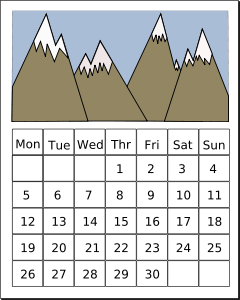
More excitingly, I think I recognise some team names as having UK members; the ManMaths team has Manchester solvers, including the team behind the wonderful Puzzlebomb. Likewise, I get the impression that the PuzzleBrains team may come from the forum, and a little investigation into team “Fifty-Nine Degrees North” points to solvers on Orkney. So a great deal of UK interest, and I’m sure there must be other UK solvers I don’t know about. Good luck to you all, especially in the next MUMS hunt, which starts on Monday 5th May!
 The process of finding new exit games before they open involves a lot of searching for carefully selected search terms, plus town names. Clearly it’s worth searching for the biggest cities and towns in the UK first; Liverpool is a big market which doesn’t have a site yet. Siting a game in Warrington might be even smarter still, as it’s within twenty miles of both Liverpool and Manchester.
 This is the first installment of an occasional feature to act as a status report on the exit games in the UK. On its own it means little, but repeated sufficiently many times it could be the basis of a survey of growth over time.
 Readers of a certain age will recognise the picture at once as the iconic Helmet of Justice from the legendary UK puzzle show Knightmare, a staple of ITV during the late 1980s and early 1990s. The show overtly featured riddles and transportation puzzles; even navigating the real human player around the computer graphical dungeons could be a puzzle in itself. Changes in TV channel demographics meant there wasn’t a place for the show from the mid-’90s, but it remains fondly remembered, with
 Edinburgh is a very rich city and an obvious gap in the market for exit games, so I’m delighted but not at all surprised to see
 So you had a fantastic time at DASH 6, are suffering a bad comedown and are wondering what’s next, knowing that you don’t want to have to wait a whole year until the next one. (OK, I wrote “you” when I’m really referring to myself, but I don’t think I’m the only one.) So what’s happening before then?
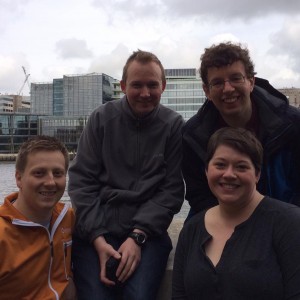 DASH 6 was a considerable triumph, both in terms of the global hunt and the London leg specifically. No spoilers about the puzzles, not least because the event will be recast in Minneapolis at the very least, but the puzzles varied from entertaining to spectacular, the production values were very high and most of the puzzles required as much teamwork as you would hope for. London had a total of 21 teams over the two senior tracks, up from last year’s eight. The weather broadly held with only the fewest spots of rain, contrary to predictions of persistent showers all day at the least. Our GC team did a great job too. Indications are that the Magpie team won the London leg again, as expected; many congratulations to them! ClueKeeper was also a big winner on the day; a couple of teams reportedly had obvious glitches with no impact on gameplay but the system lived up to its potential.
 A few quick news stories while I’m passing:
 Not a whole lot of time for posting from London, so here’s a little something I prepared earlier. Again, the whole thing is too long and too image-heavy for feed readers, so forgive me for making you click through.
 I’m off to London, for reasons that you may well be able to guess, and I very much hope that you can play a part in them. I hope you can understand a lull in posting while I’m away.