Around the World: Boda Borg

Boda Borg logoA few days ago, this site predicted that “There is practically a 100% chance that something incredibly cool, of which this site was not previously aware, will make itself known.” Nobody was expecting a very strong candidate for the title to arrive quite so soon, and a very grateful tip of the hat to Ed Roberts of Breakout Manchester for pointing it our way.

With roots that can be traced back to Sweden in 1995, Boda Borg is a company operating, directly or by franchise, a series of adventure centres. Currently seven are open in Sweden, one in Ireland and two are apparently under construction in the USA, one on either coast. The adventures are played by teams of 3-5, and are suitable for both adults or children aged, perhaps, 8+. (This brilliant writeup suggests that the Swedish centre clientele may be 80% adult; maybe less different from established exit game demographics than you might think.)

Each centre consists of a collection of Quests, which are independent and can be completed in any order. Each Quest consists of a series of 2-5 (possibly fairly small) rooms that must be completed in order. By way of an example, the Irish location, at the Lough Key Forest and Activity Park, has a total of 15 Quests and 47 rooms. (The Boda Borg web site implies that the Swedish centres are larger, with 20-25 Quests each.) €15 per person will get your team access for two hours (during which time, two fully completed Quests is apparently a par score) or €20 per person will get your team access for the whole day.

To complete each room in each Quest… well, that’s up to you, and the reason why Boda Borg is so interesting is that the instructions aren’t explicitly given, and you have to figure them out from context yourself. Quoting the web site, “Once you enter only teamwork using countless different skills, ingenuity, trial and error will allow you to survive the Quests.” Some rooms will pose purely physical challenges, others a mixture of physical and mental challenge; a colour-coding scheme on the doors hint at which are which. The official explanation video hints at the variety of challenges on offer, but also implies that one relatively frequent physical challenge theme is “don’t touch the floor” – but dressed up in sufficiently many different ways, and with such a variety of props to aid you in this, as to maintain interest. That’s cool; that’s fun.

From context, sets of sensors will detect any failure by any member of the team (and working out how failure is defined is part of the challenge) and cause the team to need to start the entirety of that Quest over again – or, perhaps, give a different one a try and come back to that one later. Success through every room of a Quest earns access to that Quest’s ink stamp, with which to emboss your low-tech scorecard. (A scoring system that has been good enough for letterboxers for decades.)

More specifically, this video seems to come from the Irish site and dates from 2009. While Quests are changed from time to time, this may give you a more practical sense of feel for what you might find in practice. (Rabid spoilerphobes might conceivably choose to keep away.)

How does this compare to an exit game as this site knows them? It looks, principally, rather less labour-intensive. Teams are left to their own devices, attempting the Quests in the order of their choice – so, by implication, there is an assumption of good faith and good queueing between the various teams running round the site independently. (If there are many more than fifteen teams, and only fifteen Quests, perhaps the waiting might get a little in the way.) It’s also unclear quite how sophisticated the mental aspects of the various Quests are; presumably there are some deliberately very accessible ones and possibly also some rather more obtuse ones. Noting that Quests are independent of each other, it would be unfair to expect the degree of interconnectedness that you might find in (particularly a relatively story-heavy) exit game.

It all sounds extremely promising, though how it might work in practice is another matter. From a distance, the best way to judge is TripAdvisor – and, as usual, better to read the comments than just go by the (generally very favourable) ratings – and to bear in mind that the people making them may have a wide range of sets of expectations going in. It’s worth bearing in mind that most of the comments reflect the entire park; Boda Borg probably comes off better than the park at large.

A telling recent comment reads: “Took us a wee while to find our feet (14,13 yrs old sons & hubby + me) but it was great fun when we completed a few and got the team work nailed! I took many laughing fits as we struggled to get through some and we all had sore knees climbing & crawling and my hubby who is 6ft 2 banged his head quite a few times but that’s all part of the fun. Will definately be back to beat our poor record best afternoons craic in a wee while. Super activity for all the family provided everyone is reasonably mobile and has a sense of humour!” On the other hand, a different (rather older) comment reads: “Inside, it is cheaply constructed, very poorly supervised and dimly lit. The day we were there, many of the ‘challenges’ were broken, others were in poor condition with important items missing and there were young teenage children running amok inside racing up and down narrow corridors. It was like being in a claustrophobic secondary school playground.”

The truth will surely be somewhere between the two extremes; it also seems reasonable to suggest that there were rather more complaints over the standard of maintenance in 2013 than there have been in 2014. It would be very interesting to know what the maintenance schedule is and whether there’s a sense that the site might be at its best “early in the season”. (You might also choose to give higher importance to reviews from, perhaps, a game-ier context at BoardGameGeek.)

If you’re the sort of person who is sufficiently game for a certain sort of laugh that you’re willing to make a journey to play an exit game, or to go out of your way to play with toys and environments so impressive as to be impossible at home, the odds are surely extremely promising for Boda Borg. (It reads like being as close as you’ll get, these days, to the sort of fun from the Cyberdrome Crystal Maze of old – except, twenty years later on, lower-tech.) Definitely one to follow as franchises spread around the world. It would be interesting to know whether the economics might make a site in Great Britain work, or whether our land and installation costs are just too expensive. The capital expenditure would surely be much more than that of a basic (almost modular?) exit game, but the potential daily throughput could be tremendous while being much less labour-intensive than that of a one-moderator-per-team exit game.

The island of Ireland already has quite a tradition of exit games, and growing; the prospect of a tour some day to experience just all the games that it offers, let alone its other appeals, becomes more and more promising. Or, further afield, there are seven Bodas Borg to try in Sweden. Road trip!

Interview with Ed Roberts, proprietor of Breakout Manchester

Breakout Manchester description graphicThis site has previously discussed the Breakout Manchester exit game business, around two months old but already doing excellent business. It’s a joy to be able to feature an interview with Ed Roberts, the man behind the site. The questions asked by Exit Games are tagged with EG and Ed’s responses with ER below. The opinions are a little feisty in places; no bad thing at all, but be clear that they belong to Ed.

  • EG: What’s your background, leading up to the opening of Breakout Manchester?
  • ER: I’m a director in two other business, Awaken Ibiza and Funk Events, so up until opening Breakout I was running those companies. A lot of the skills developed in running these two businesses have been hugely beneficial in launching Breakout Manchester.
     
  • EG: It’s exciting to see your Tweets from time to time suggesting that Breakout Manchester is selling out days in advance. Can you say more about how well things are going for you?
  • ER: Yeah, things are going remarkably well. Another company opened in Manchester about 2 months before we did and I think it’s struggled. So for us to be selling out a few days in advance and weekends a few weeks in advance I’m really happy.
     
  • EG: Your excellent progress is all the more remarkable given that the site has only been open for about two months. What techniques have worked well for you at getting the word out around Manchester?
  • ER: My background is in advertising, marketing and promotion has been hugely beneficial. We use some fairly advanced social media techniques to promote the venue and I have done promotion in Manchester for the past 7 years I know a lot of people and organisation in the city which have been a big help. In addition to that, word of mouth is one of our strongest attribute, and that comes from people having an excellent experience with us and then those people spreading the word.
     
  • EG: Which puzzles, games and other artworks have influenced you most over the years in your designs?
  • ER: I really enjoy action computer games. Games such as Zelda, Dishonoured, The Room and The Room Two. Also TV programmes such as The Cube and The Crystal Maze. I’ve always been a huge fan of puzzles my whole life.
     
  • EG: What lessons has your background in event promotion taught you about offering good customer service?
  • ER: In terms of customers service probably not a huge amount, this is one thing I have learnt a lot of from doing Breakout. Where it has hugely helped is the promotion, marketing and advertising of the rooms and the venue.
     
  • EG: It was fun to read that representatives from first the Daily Sport and later the Bolton News have visited your site. Do you have any other star guests lined up?
  • ER: Not really guest stars but quite a lot of press will be coming through in the next few weeks.
     
  • EG: What does a typical day for you look like?
  • ER: I normally get to the venue around 7am and do around 3 hours on Awaken Ibiza or Funk Events. I then organise the staff for the day and spread my time between running the games, tweaking the games, promoting and advertising the venue. The venue is also incomplete so various DIY and decoration is still in place. To be honest for the past week it’s been non-stop running of games. I normally finish around 9pm.
     
  • EG: What are the most memorable reactions from players that you have witnessed?
  • ER: The other week we had 4 teenagers with behavioural issues in from Manchester Young Lives. They were accompanied by 3 teachers from the centre. They had all previously been expelled from numerous schools. The 4 of them absolutely loved it and were captivated from start to finish. Their teachers said their concentration spans were normally that of minutes and had never seen them working as a team before. Turning four disinterested teenagers into a team of happy, energetic and proud young adults was a very memorable moment. To see them rave about it afterwards really impacted me. A good escape room game is fantastic for all ages and in all situations. This particular example is a great example of this, and is testament to the quality of the room.
     
  • EG: How are your preparations going for adding a third room at your current location?
  • ER: Extremely slow 🙂 It’s the first room I’ve ever created completely by myself so I want to assure it’s as good as possible. It’s called Madchester so revolves around Manchester, its history and culture. Think the Hacienda, Stone Roses, Oasis, Coronation Street and so on. It will be open at the end of July if it kills me! 🙂 I’ve been to a few other sites around the country and with the exception of all the London sites, Leeds and one of the Bristol ones, some of them are very poor and I want to assure that my centre is as good as it possibly can be. If someone has a bad experience of an escape game it will put them off for life which would be such a shame.
     
  • EG: Can you reveal anything about your longer-term plans after that?
  • ER: We have the capacity to open another one maybe two rooms in Manchester so my focus is on that and to create some games which push the boundaries of the industry. I’ve got a lot of ideas of how escape rooms can break out of their current mould and I want to explore that. Why do they have to be an hour long for example? Could a escape room be more story driven? It’s exciting times for the industry as a whole.
     
  • EG: If you could give the readers, escape game players and puzzle fans reading this one piece of advice, what would it be?
  • ER: Play The Room and The Room Two on a tablet. Then come to Breakout 🙂

Thanks so much for that, Ed! Note also that last week, Breakout Manchester posted to their Facebook feed that:

Breakout Manchester is recruiting. We need game organisers, makers and technicians. Part time flexible hours available. Must have good customer service skills. If interested please send your CV to hello@breakoutmanchester.com and the days and hours that you are available to work.

Full-time and part-time roles are available, so as well as there being a good opportunity to play the site’s games, perhaps there’s a good opportunity for the right people to be involved from the other side as well!

Interview with Stephen Miller, proprietor of Pyro Puzzles

Pyro Puzzles logoThis site has previously discussed the upcoming Pyro Puzzles series of mechanical puzzles and the Top Secret cryptic treasure hunt being run near London on Sunday 3rd August 2014. It’s a privilege to be able to feature an interview with Stephen Miller, the devisor of these puzzles. The questions asked by Exit Games are tagged with EG and Stephen’s responses with SM below.

  • EG: How did you get into puzzles, Stephen?
  • SM: I’ve always liked puzzle boxes; the idea of having something on display that hides a secret inside, is something magical. However, until quite recently I didn’t own any such boxes, as I had no clue where to get them from. Now however, I have a decent little collection thanks to the guys at MPP – the Midlands Puzzle Party. I joined this group and have attended all of their recent gatherings, even going to the Netherlands for the Dutch Cube Day where there was a puzzle market, which resulted in me going home with an empty wallet, but a very full backpack.
     
  • EG: What from your background led you towards puzzles?
  • SM: I was an inquisative child and when I was nine years old (1979) my Uncle showed me a book called ‘Masquerade’, by Kit Williams. My Uncle was an nature artist and did lots of paintings of birds, animals and the countryside. He’d bought the book because Kit Williams had done some fabulous paintings of similar subjects to illustrate the book and had hidden a hare in each painting, my Uncle challenged me to find the hare in each – I found all but the first hare (which was hidden inside a hill in the picture!). Kit Williams had buried a golden hare somewhere in Britain and had hidden the clues for finding it in his book and I got hooked on the idea of buried treasure, avidly following the subject until the hare was dug up in 1982.

    About eight years ago, the memory of ‘Masquerade’ surfaced, after being forgotten for some 25 years, and I went on-line to look it up and found several communities dedicated to it and similar treasure hunts. I joined the communities (Q4T – Quest for Treasure and TATHC – The Armchair Treasure Hunt Club) I took part in a few hunts and then started running them for these groups, which was great fun.

  • EG: How is the market for physical puzzles, such as your past Isis Adventure puzzles and your upcoming Elemental puzzles?
  • SM: That’s a very good question, I had very little to do with the marketing or sales of the Tessarisis or Tarka puzzles that I designs as the fourth puzzle in the Isis series. I can only go by the fact that the Isis series pays a living wage to the company director and also pays for one or two employees, so they must be selling. I’m lucky to have a full time job away from puzzles, which pays my mortgage, so it gives me the freedom to do what I want to do with the Elemental Puzzle Series, without the pressures of having to earn a living from it – this means I can afford to ‘Do It Right’ which is the overwhelming principle behind Pyro Puzzles and The Elemental Series, the main visible manifestation of this is that I refuse to take pre-payments from people for puzzles that are not assembled, packaged and ready to ship.
     
  • EG: Of which physical puzzles do you have the fondest memories?
  • SM: It has to be the Barcode Burr by Lee Kraznow from Pacific Puzzle World, I’ve never owned or even held one of Lee’s creations, but I saw a YouTube clip of him demonstrating one and fell in love with it – a cube made up of six identical shapes that took 128 moves (64 if you know the short-cut!) just to get the first piece out. Just the thought of it blew me away.
     
    I’d been trained in 3D CAD at work, so I decided to try and draw up a Barcode Burr during my lunch breaks, using the photographs on Lee’s website – it took me three years! But eventually I figured it out (the experience and skills I gained by doing this made me a bit of a 3D CAD guru at work). I then had a Barcode Burr 3D printed and contacted Lee with some photographs of my creation – He said that other than him, I was the only person ever to make one. He was impressed with my work and has given me permission to make up to one hundred Bar Code Burrs – which is very kind of him. I’ve looked into getting them machined from aluminium and anodised, but the complexity of the design means they would cost far too much.
     
    (See also a video review of the Barcode Burr.)
     
  • EG: You have a background of co-setting some of the Armchair Treasure Hunt Club’s in-person events. What aspects of armchair treasure hunts and in-person events do you particularly enjoy?
  • SM: I enjoy dreaming up the challenges and then formulating them and linking all the elements together to make a cohesive whole (so the interconnections hold the theme together – as I did for the Avebury hunt where everything appeared to have been waiting to be discovered for 3,000 years), where everything fits together properly. It’s also very important to vary the challenges so some are easy and some a bit more difficult, so everyone feels that they are contributing to their team and that their team is making progress. On the day, I enjoy seeing how people react to the challenges I’ve set, it’s great watching people sweat and then see the light bulb come on when they discover the key element that solves the problem.
     
  • EG: Are there any armchair treasure hunts of which you have particuarly fond memories?
  • SM: Well, obviously ‘Masquerade’ was the genesis of armchair treasure hunting and I have memories of that (I have 16 picture frames hung on my wall which show the 15 beautiful paintings and title page from the book – cost me £26 for the two copies of the book and £171 in picture frames!), as far as hunts I’ve taken part in, those would have to be my first one which was at Ampthill with Q4T in 2008 and then Olney in 2011 with TATHC (the only one that I’ve actually won). The most memorable moment from one that I’ve run was at Bourton-on-the-Water in 2010 when someone who’d claimed that they were not competitive, solved the final clue, ran about 500 yards and jumped into the river, without taking their shoes off, in order to recover the treasure (we had waders available for them to use, but they didn’t bother to stop for them)!
     
  • EG: How are preparations going for your “Top Secret” treasure hunt in Essex on Sunday 3rd August?
  • SM: We’ve got all the plans in place, just need to write everything up and laminate various pages, so they don’t get trashed too easily – I’m having to get it all sorted well in advance, as I’m planning to launch ‘Fire’ the first challenge from the Elemental Puzzle Series at the beginning of August, so most of July is going to be taken up with assembling, engraving and packaging ‘Fire’ ready for August.
     
  • EG: You have said that your event will be “similar to ‘escape the room’ type events, except that here there will be multiple rooms to challenge and confound the participants. What have you learnt from such games that you will be applying in your hunt?
  • SM: That would give too much away at this stage, I don’t want to let the players into my head or they’ll figure out how I think!
     
    But I can say that the ‘Top Secret’ event is similar to ‘Escape The Room’ games, in that the teams have to escape. There will be multiple rooms, each containing codes and riddles that need to be decyphered and solved to reveal how a team can escape the venue and recover the treasure once outside.
     
  • EG: You have previously suggested that you expect to be able to accept teams until the end of June. Are you still taking entries?
  • SM: Actually, we can accept individual and team bookings up until the end of July – the more the merrier. However, we’ll be sending out final instructions and details for where to meet a week or two before the event, so everyone knows where to be and at what time. We have had a few full team entries, but most are individuals, we’re happy to shuffle people around at the start of the day, so everyone is in a team, so don’t worry if you don’t know anyone else who wants to come, we’ll sort you out with a team and you’ll probably make some good friends that you’ll keep in contact with.
     
  • EG: Can you reveal anything about the hunt that has not yet been made public?
  • SM: There is a teaser hidden within the electronic flyer for the hunt (.pdf file).
     
  • EG: Why are you making your puzzles under the name ‘Pyro Puzzles’?”
  • SM: I have always worked with explosives and pyrotechnics (I was a qualified bomb disposal engineer before I left school!) and have used the ‘Pyromancer’ name in pretty much every forum I’ve ever joined. So when it came to finding a suitable name for a puzzle concern ‘Pyro Puzzles’ just fitted the bill – It also appealed to me through the links and interconnections that I love so much, in as much as my first solo puzzle will be called ‘Fire’, the Greek for fire is pyro and of course ‘Greek Fire’ is considered one of the first pyrotechnic/explosives used by man.
     
  • EG: Is your upcoming treasure hunt completely self-contained or is there useful preparation or background reading that players might do in advance, particularly in terms of the theme of the event?
  • SM: It is completely self contained, as we don’t want anyone having an unfair advantage, so we’ve included elements for puzzlers, treasure hunters and mere mortals.It is completely self contained, as we don’t want anyone having an unfair advantage, so we’ve included elements for puzzlers, treasure hunters and mere mortals.

Thanks so much for that, Stephen! While that week will be a tricky one for the webmaster of the site, this site very much hopes to be able to feature coverage from the event. If you enjoyed DASH in April, or if you’ve played and enjoyed a few exit games, while nothing can be guaranteed, this sounds like it has the potential to be spectacular, and you can investigate the considerable strength of Stephen’s track record for yourself. At the very least, it sounds like a good excuse to get your team back together and have a puzzle-filled day out.

While Stephen suggests above that individual applications are welcome as well as team applications, if readers of this site happened to want to organise a team for this hunt between themselves, there’s a comment box below which would do the job admirably.

in memoriam ludorum: Entros

Cartoon gravestone pictureThis site announces a new, infrequent, irregular series about some of the most interesting games of yesteryear, for fear that they are forgotten for good. The title in memoriam ludorum hopefully works better than the alternative Game but not forgotten.

Entros was a restaurant in Seattle, and later San Francisco, for most of the 1990s. It was distinctive for offering imaginative games along with the food, on a scale sufficiently grand and with equipment sufficiently advanced that a dedicated centre was necessary to house them. At a basic level, you could pull up to the bar and have some fairly familiar fare accompany your food and drink: Boggle, backgammon, card games, or pen-and-paper puzzles. However, for a few dollars more, you could get a sticker to get you access to the six or so big games, rotated once or twice a year, and these big games were about as imaginitve and exciting as it got – arguably, among the most progressive games made available to the public of all time.

Peter Sarrett, a fixture of the Seattle game and puzzle community, wrote a juicy, love-laden tribute to the big games on offer in his wonderful old board game printed ‘zine. Sadly the publication is no more and the URL (gamereport.com) of the archive site was far too good not to be snapped up, but happily archive.org has a saved copy. The article is a must-read, but here are some of the most interesting parts to whet your appetite:

“The office is quiet – perhaps too quiet. My companion and I quickly speak into our headsets, describing our surroundings to our partners tucked away in a remote control booth. Cross-checking our descriptions with their information, they tell us to search the bookcase. Sure enough, we find a hidden latch and open a secret door to a darkened room. There, on an illuminated pedestal in the far corner, is our prize- a valuable statue stolen from the art museum. My companion starts to move for it, but I hold him back just in time and point to the floor, an ominous black grid of unusual symbols. Sure enough, our partners tell us it’s rigged to an alarm, but they can guide us through it safely.

We scan franticly for the safe symbols they describe, using them as our stepping stones toward the statue. Halfway through we seem stranded, unable to find a nearby safe square. We shout into our headsets, panic rising, until my companion shouts triumphantly and points to a safe spot. But we’ve taken too long now and we’re out of time. A klaxon wails and the room floods with light, and we’re escorted politely but firmly from the room. Caught. Undaunted, we get back in line for another try.

[…]

After dinner a tantalizing array of activities await. Designed by on-staff gamemakers, these activities aren’t about virtual reality or man vs. machine. They’re about people interacting with each other cooperatively and competitively. Take Interface, for example – Entros’ longest-running game. One player wears a blinding helmet with a front-mounted video camera which sends an image to her monitoring partner. That partner talks the “operative” through a series of activities through a two-way radio link, racing against the clock in a high-tech trust walk. Three different sets of activities exist so players can swap roles and still get a fresh experience.

[…]

The first time I visited Entros they were running a multimedia odyssey called The Forever Formula which contained a puzzle sequence which remains my favorite. As we entered the building, we passed by a telescope mounted on a tripod in the lobby. It seemed an usual bit of decoration, but we forgot all about it as we entered the restaurant through the fake phone booths, humming the Get Smart theme song. During the game, a clue suggested that we look between the pillars of Stonehenge. We remembered that a stone arch was painted on the glass of the building’s front door, so we returned to the lobby. Sure enough, when we aimed at the painted icon we could see through the telescope the magnified image of a small sign mounted on a building across the street. The sign said something like, “For your next clue, call the Kremlin.” As it happened, a pay phone sat just a few feet from the telescope. Dropping a quarter, we dialed K-R-E-M-L-I-N and got a recording of a man with a Russian accent directing us to our next stop.”

It’s not clear why Entros went under (and the eight or so years it had are far from a bad run) though this site notes that a 1998 review noted that “Given the heady nature and price tag of an Entros visit – about $75 per person – Entros tends to attract a well-educated clientele” and that the closure happened at about the same time as the first dotcom crash. Or perhaps the games were great but the restaurant half of the business didn’t pull its weight; the food is discussed in this 1994 review. Maybe the whole prospect was just ahead of its time and the mainstream nature of exit games shows that the market is prepared to accept brainier, gamier fare now than it was half a generation ago.

The games are still offered by Forrest-Pruzan Creative, a company with many former Entros employees working for it, and were seen in the wild at the Pacific Science Center in late 2010, and perhaps since. This list has details of all the games on offer, and we can but dream about playing them. To show just how old-school the list is, most of the games have videos available… but to see them, you’ll need to dig out RealPlayer!

(Reminiscences from people who were actually there at the time would be most welcome, especially if people can place them in the context of the games and puzzles that have followed it. This site’s writers live eight timezones away, as well as years too late, but can tell when they’ve missed a treat.)

Interview with Paul Bart, CEO and Founder of The Escape Hunt Experience

Escape Hunt global logoHere’s a perspective you won’t find elsewhere. This site has already discussed Escape Hunt, set to open in London in August. There are already three Escape Hunt sites open, in three different countries, and the locations list details the ambitious expansion plans around the world, particularly over the short-term future.

Accordingly, it’s exciting to be able to feature an interview with Paul Bart, the CEO and founder. There are very few brands with a similar global perspective and profile, so Paul’s take on the genre, and his background, will be distinctive. The questions asked by Exit Games are tagged with EG and Paul’s responses with PB below.

  • EG: How did you get into “escape games”, Paul?
  • PB: I was looking for a new business idea a while back and I noticed around a year ago that a few escape games were spring up and doing well in other cities. I decided it was worth looking at how they were being run and what the potential was to expand with them globally. Unfortunately none had a truly global vision and I decided I had to go it alone. Hence The Escape Hunt Experience was founded.
     
  • EG: What is your background that could possibly relate to this?
  • PB: There are many factors here and, without boring you, let’s just say I have always been fascinated and challenged by puzzles. I was the kid who would stay up late at night in bed trying to figure out how to solve a maths or word puzzle. I also have a good psychology degree specializing in several areas one of which is IQ testing and another is data analysis relating to statistics. Add in many years of corporate training, seven languages and a lot of other eclectic experience and that might tell you why I love what I do so much.
     
  • EG: How do you see this market now and in say 12 months time?
  • PB: Now it is growing fast and it will continue to do so. There are two main types of players now – larger companies like us of which we are the clear global leader and then local games with one or maybe a send branch only. As time goes on, this will get more blurred with regional players, more different styles and a lot of different ideas. We are clear where we will be in 12 months time – around 100 branches worldwide in our own style but maybe more advanced games as this changes monthly.
     
  • EG: What is your current personal contribution?
  • PB: I run the business so I have a lot of strategic responsibility. I also oversee all the global marketing and franchisee relations. Most of all I love game design so that takes a big chunk of my time leading our global game design team based here in Bangkok.
     
  • EG: Which puzzles, games and other artworks have influenced you most over the years in your designs?
  • PB: That is a hard one! I love art – everything from Renaissance to Modern and also sculpture. I also love languages. Add in some darker stuff like the occult and great literature and you can see its very eclectic. Most of all we try very hard to be logical and balance our games. Many game providers don’t see the need for that but it is very important especially as we operate in so many countries with so many languages.
     
  • EG: If you could predict the future for escape games, what would it be?
  • PB: Growth, growth and more growth! Then some diversification into new areas. We have huge plans here. Watch this space as they say…
     
  • EG: Do you see it appealing to different markets in different geographies?
  • PB: Of course. It’s a global phenomenon. At our Bangkok branch we have seen nearly 20,000 players and I can’t think of a country not represented. It is a fascinating anthropological study, believe me. Filipinos are so different from Thais, Brits from Americans. They all have fun in different ways. Doing as much corporate work as we do is amazing too as we see global companies bring their worldwide staff – all very different styles!
     
  • EG: How, in practice, do different countries vary from each other in what their players are looking for?
  • PB: They all want fun but some are more serious. It sounds like stereotyping but it is true that Europeans take it more seriously and Asians take more photos afterwards as just one example…
     
  • EG: Have you identified any trends as to which nationalities prefer which styles of puzzle?
  • PB: Actually Chris, it is fairly culturally neutral overall. I see no bias for different preferences actually but If you ask me about ability, that is a totally different question. Asians are renowned for their quantitative skills whereas Europeans and Western nations in general are more qualitative. This bears out in game play too but it is also about initiative. Asian players are generally better at solving puzzles once they are “shown the way” if you like whereas western races grasp the idea quicker but then don’t make such good progress in average. It all equals out in the end pretty much and then differences some done to social factors such as assertiveness, cooperation and leadership. It’s a long story; maybe I can answer next time in a specific chat on this point.
     
  • EG: How do you deal with language issues, particularly in countries where there are a multitude of languages spoken or where tourists are such a high proportion of visitors that you cannot reliably make assumptions about what languages they speak?
  • PB: That’s a great question, Chris. We run both multi-language games and single language depending upon the location. Our Asian branches are multi but London will be single language. It is not always obvious which language either! Phuket will run in English and…. Russian. Not Thai as you would expect. Overall, we adjust for cultural bias and language in our games so language plays a very small role in overall game play. Bangkok is another great example of this. We run in Thai and English but despite even messages in Japanese on our website to say “we do not speak Japanese. These games are only in Thai and English”, such is our popularity amongst Japanese locals in Bangkok and tourists, they still come and speak absolutely not one word of Thai or English. We still have great fun using sign language and they leave with a big smile!
     
  • EG: Where are you based and how does that allow you to work?
  • PB: I am based in Bangkok but travel all over the world. I am on the road a lot setting up our game centres and I install all games personally. I love that…
     
  • EG: What is a typical day for you, Paul?
  • PB: There is no typical day but overall it is around 30% game design, 20% franchisee support, 20% marketing, 20% technical things and 10% on Bangkok branch.
     
  • EG: What are the most memorable reactions that you have witnessed?
  • PB: I have to say that large groups of Filipinos are the most exuberant when they solve the puzzles and then they all get so happy in a huddle but for me it is the 3-4 occasions where an older player has personally shaken my hand and thanked me for the “best time they have ever had with their grand children”… Really makes all the hard work worthwhile!
     
  • EG: What has surprised you in the last 12 months?
  • PB: A lot of things but mainly for us how successful we have been and how we have adapted our proposition to all the different cultures and geographies. In Bangkok branch, we also developed a huge corporate following without a single call to a company. They all find us. Singapore has also been so successful only a short time after opening it shows the power of our global brand.
     
  • EG: What have your years of corporate training experience taught you about how to tailor the experience when you offer corporate events?
  • PB: Wow! OK, the short answer is always understand beforehand what the agenda is. We have hosted ExxonMobil and Shell at one end of the scale and small local travel companies at the other end. The key is to know how they want to play things. Our website has a sample corporate agenda in the FAQ section but actually it is the whole atmosphere that counts. We always keep it fun and stimulating but we can also get into some deep coaching too if needed. I try to personally host each corporate event as I have the skills but we even get into quite esoteric stuff at times like hypnosis and visualisation techniques. It is all about what the client wants and we do cater to all needs…
     
  • EG: What would you say to anyone who feels they want to work in this industry?
  • PB: Go for it. It’s a great and exciting place to be. Whether as a game designer, game master or even the administrator, its never a dull moment. There will be courses at universities soon on “Escape Gaming” or as we call it, “Experiential Entertainment”.
     
  • EG: What misconceptions about the industry would you most like to dispel?
  • PB: I think all the press and feedback is positive. The only things I would say that are unfair are the criticisms of games at number one on TripAdvisor. We have been number one in Bangkok since a month after opening and we deserve it as we offer an extremely high level of satisfaction. Sure, we are not a temple, but maybe we offer better service and satisfaction! I guess the only other point is that the industry is not only for geeks as is often assumed. We are a major international company operating in many countries so its hardly geeky anymore – no more geeky than working for Apple, I guess!

    Thank you for your time, Chris, and letting me tell my story! For all those who want to be part of our future, we still have franchise opportunities available in many locations. For those who want to work with us, send us your resume via our website. We are hiring in all sorts of areas!

Thanks so much for that, Paul! This site very much hopes to feature more interviews in future as a way to get a variety of perspectives from behind the scenes. It also considerably adds to anticipation for the London opening, just a few months away.

The best of the rest

Ornate letter BSometimes issues crop up in the real world with unexpected relevance in the world of puzzle competitions as well. The week before last, the chairman of the Football Association, Greg Dyke, released an England Commission report, regarding supporting the number of English players involved in the game at a high level, hoping to boost the chances of the English national team down the line. The aspect of this which has most caught people’s attention is the proposal to permit clubs to enter second (or “B”) teams into the existing structure. The proposals have largely proven unpopular. However, the world of puzzle competitions has faced similar issues in the past.
B teams at the World Puzzle Championship

Some years, the World Puzzle Championships have permitted nations to enter “B” (and, very occasionally, “C”) teams as well. Officially, the individual ranking order only includes the (up to) four designated “A” team members per country, and the team ranking order only includes “A” teams with four members; if a country enters fewer than four members, they will get individual rankings, but the country will not get a team ranking.

Unofficial ranking orders are also produced, ranking “A” team members alongside “B” team members and sometimes (see, e.g., Beijing 2013) even guests as well. Only “A” team members are eligible to take part in play-off competitions held as grand finals. Sometimes it happens that a non-“A”-team member performs well enough that they would have made the play-offs and are excluded from participation, but there is no outcry against this practice. The theoretical issue comes if a non-“A”-team member outperforms all the “A”-team members and yet still cannot enter the playoffs; people seem reasonably content that this is likely to be only a theoretical issue, sufficiently unlikely to crop up (and risk asking questions about the validity of that year’s championship title) in practice.

Consensus of opinion seems to be in favour of “B” teams; again looking at Beijing 2013, a majority of the most successful nations sent whole “B” teams, and it may well be that many of the “United Nations” teams are made up of incomplete “B” teams. At one point, the World Puzzle Federation board never reached a conclusion on the issue and left it to individual championship organisers whether or not to accept “B” teams; the principle of “B” team and guest participants paying a slight surcharge to subsidise “A” team participation, particularly from “A” teams whose members would otherwise not be able to afford to participate, seems to have proven popular. (Personally, I fully support it.)

B teams in the Croco-League

The issue of “B” teams also appears in the Croco-League online team puzzle competition, as previously discussed. Here, teams can choose to name themselves whatever they like, and some teams choose to name themselves as being the second team of another, established, team in the league. There is no formal tie between the two teams; it’s not possible for a “B” team to send players to the “A” team or vice versa, other than through the usual routes which (largely) only permit players to leave established teams between seasons.

It’s probably fair to compare this to the World Puzzle Championship tradition. It’s also probably fair to say that the Croco-League doesn’t just draw on the tradition of association football leagues, it draws on the tradition of the German league system in particular, which has long featured clubs’ reserve teams at a reasonably high level.

Several of the Croco-Puzzle teams draw their membership from whole countries and name their team accordingly, which is fun. As so many of the site’s users come from Germany, naturally enough, many of the teams draw their membership from specific parts of Germany and name their team accordingly, which is also fun. When there are more solvers from a non-German country than can fit in a single team, some communities have tended to organise themselves into “A” and “B” teams, whereas the UK tradition so far has been to have a Northern UK team and a Southern UK team. (Even then, the distinguishing line is whether someone feels Northern or not, for any other boundary would effectively be as vague and arbitrary – people move, people are not distributed evenly around the UK, and so on.)

I feel strongly that, as much as I support “B” teams in the World Puzzle Championships, I oppose “B” teams in the Croco-League. It’s fun to feel like you’re competing against the best that a country, or a region, has to offer; it’s much more meaningful to feel like you’re competing against the best that a small locality has to offer than to feel like you’re competing against the second (or third, etc.) best that a larger area has to offer.

It’s not for me to tell other communities how to organise their teams, but I definitely have a strong preference for a geographical split. After all, in the World Puzzle Championship, you (barring velvet revolutions and independence referenda) can’t choose which country you represent; in the Croco-League, it’s easy to start a new, more tightly-focused team.

Perhaps my preference for there being many teams with tight geographic bases is a direct reflection of my familiarity with the English football league tradition rather than the German one. I am strongly against the proposal for “B” teams in the English football leagues, so perhaps it is not surprising that I have counterpart feelings about the Croco-League.

Within two weeks of the DASH puzzle hunt in London and the US

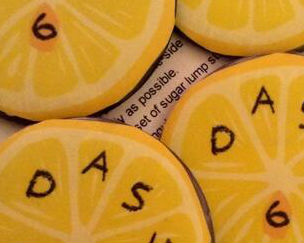
DASH "sugar lump"As previously discussed, the Saturday after next will see the sixth DASH puzzle hunt take place in London and in a dozen cities across the US. We don’t know much about it, though this Tweet from a team running the playtest in Portland inspires the above picture and gets us thinking about “sugar lumps”. Hmm.

The DASH Facebook page has also been running a series of previews of local co-ordinators. Dan Egnor, who has forgotten more about puzzle hunts than I have ever known, has said on Google Plus “This is so gonna be in a puzzle…” – it’s not really the DASH way to feature pre-clues, but there’s always a first time, and nobody ever said “This is not a clue” – so perhaps, just perhaps, never a truer word spoken in jest.

The great scholarly work of puzzle hunt puzzle taxonomy is Joe DeVincentis’ MIT Mystery Hunt Puzzle Index. If ever you want to astound people with the breadth of what can be achieved in a puzzle, that categorises over eighteen hundred of the hardest. In a similar vein – though I must admit insufficient familiarity to be able to use the same categories as Joe – I have attempted a similar analysis on the puzzles of the first five DASH events to date:

2009 Palo Alto: music (identification from audio samples), letter links
2009 Boston: picture identification, poker, indexing
2009 Los Angeles: phonetic letters and numbers (NV = envy or single letters), indexing
2009 Washington DC: poker, indexing, reading vertically
2009 Houston: physical puzzle, paper dolls, logic puzzle based on elimination
2009 Portland: picture identification, westerns, Morse
2009 Seattle: crossword clues, overlapping words, reading last letters
2009 Palo Alto: wordplay induction to deduce hidden rules (sports teams, phonetic letters, A=1 B=2, double letters, phonetic alphabet, identify countries, palindromes)
2009 Meta 1: rock scissors paper, wordplay from puzzle names and answers
2009 Meta 2: semaphore, rock scissors paper, wordplay from puzzle names and answers
2010 Alvin and the Chipmunks: music (identification from audio samples), word rebus
2010 The Brady Bunch: identification of pictures, induction of common themes, sorting, indexing
2010 CSI: Orlando: identification of pictures, Disney movies, sorting, indexing
2010 Late Night with Conan O’Brien: identification of pictures, TV shows, hidden words within quotes, extraction of extraneous letters
2010 Dancing with the Stars: soundalike gibberish, constellations, combining pictures to spell letters
2010 How I Met Your Mother: wordplay linking pick-up lines and logos, braille
2010 LOST: crossword clues, sorting logos based on colour clues, indexing
2010 Star Trek: identification of characters, bases other than ten, arithmetic applied to letter numbers
2010 Twilight Zone (Meta): mapping phrases within answers to buttons on remote control, mapping data to lines to letters, using one physical prop on another built up during the hunt
2011 Snow White: Snow White character names, hidden words within quotes
2011 The Town Musicians of Bremen: music (identification from audio samples), dot-to-dot lines travel over letters
2011 Cinderella: creation of physical prop, recognising physical prop’s ability, identifying common letters in pairs of words
2011 Rumpelstiltskin: trivia questions, picture rebuses, recognising letter shapes
2011 Rapunzel: creation of physical prop, pattern matching, arithmetic applied to letter numbers
2011 Chicken Little: wordplay induction to deduce hidden rules, letter binary code, identifying letter patterns in grid
2011 Hansel and Gretel: wordsearch (slight variant), letters not used in wordsearch, wordplay induction to deduce hidden instruction
2011 Jack and the Beanstalk: creation of physical prop, wordplay induction to deduce hidden crossword clues, crossword clues, word rebus
2011 Three Little Pigs: number logic puzzle, crossword clues, induction of common theme
2011 Meta Puzzle: wordplay induction on previous answers, crossword clues, jigsaw, maze, symbol identification, indexing
2012 Golden Gate Bridge: crossword clues, identification of states, dot-to-dot lines travel over letters, letters not used in grid
2012 Mausoleum At Halicarnassus: wordplay induction to deduce hidden instruction, binary decoding, semaphore
2012 Temple of Apollo at Delphi: crossword clues, triple homophones, indexing
2012 Great Wall of China: identification of pictures, wordplay induction to deduce hidden instruction
2012 Lighthouse At Alexandria: geometry, wordplay induction to deduce hidden instruction, counting
2012 Great Pyramid of Giza: crossword clues, wordplay induction to discover hidden instruction for filling crossword, use of hidden instruction on diagram provided
2012 Statue of Liberty: anagrams, wordplay induction to discover hidden instruction, use of hidden instruction on diagram provided
2012 Tower of Babel: crossword clues, flavourtext induction to discover hidden instruction, rhymes
2012 El Castillo (Meta): creation of physical prop, wordplay induction to discover hidden instruction
2013 Verify the Disorder: sequence dialogue, hidden quotes, foods and words within dialogue, matching to diagrams, recognising letter shapes, dot-to-dot lines travel over letters
2013 Identify the Affected Area: crossword clues, wordplay induction to discover hidden instruction
2013 Discover the Infection: puns, anagrams plus extraneous letters
2013 Find Patient Zero: hidden connections, binary code
2013 Isolate the Infection: mini-puzzles, crossword clues, cryptic crossword clues, hidden words within quotes, anagrams
2013 Determine Transmission: crossword clues, overlapping words, use of physical prop
2013 Develop a Cure: identify pictures, wordplay induction to discover hidden instruction
2013 Plan Distribution Method: identify grid positions, flavourtext induction to discover hidden instructions
2013 Complete the Cure (Meta): wordplay induction on previous answers, creation of physical prop, jigsaw, hidden message

So what can we learn?

  1. DASH is pretty wordplay-heavy compared to many other puzzle hunts, and there have been relatively many “interpret the flavourtext, or the answers, or other wordplay in order to deduce hidden instruction” puzzles over the years.
  2. Common tropes: extracting unused letters from words or anagrams, wordsearches where the unused letters in the grid are somehow crucial, dot-to-dots where things crossed by the lines are crucial, identifying words hidden within phrases or longer pieces of text. The theming is normally pretty important, too. To be fair, none of these are particularly exclusive to DASH.
  3. The meta puzzle often relies on some commonality between the answers, so a really smart team might be able to start to identify that commonality even before they have all the answers, then presume the existence of the commonality in the answers that they have not yet reached. We haven’t had a meta that’s in part to do with the puzzle names for a while, so perhaps that might turn up again before too long.
  4. Some of the earlier DASHes relied fairly heavily on US culture, which I think was dialed down a little for DASH 5 now that the UK has entered the fold – and, given that there’s no reason why it couldn’t spread further around the (at least the English-speaking or English-speaking expat) world, this might decrease further still over time. I get the impression that one concession for London in DASH 5 is that we were presented with a list of US postal state abbreviations that we might not be expected to know but that US solvers might – and if there are any counterparts for further DASHes (lists of state capitols? Lists of Presidents and their numbering?) don’t expect them to be red herrings.
  5. Looking at the scoring, DASH 3 was unusually long compared to the others, with particularly many physical prop construction puzzles that slowed teams down. Another relatively long one may roll round again at some point.
  6. It’s not at all an admission of defeat to take hints; the median teams may or may not take hints, but taking a hint will not necessarily exclude your team from finishing in the top 20% of all teams, or maybe even significantly higher than that – particularly if you’re fast everywhere else in a relatively long year.

Really looking forward to this year’s event, not least to getting to see lots and lots of lovely people in the same place at the same time, even more than at a Puzzled Pint. More on that soon!

Fiction: A Freemium Future

Comedy and Tragedy masksI’m not a fan of the principle of web sites lying to you on April 1st each year, but this does strike me as a good day for some overt satire. I trust we all have sufficiently good taste not to make this particular vision of a future happen.

“Welcome to SuperExit 3,000! We’re so glad you and your family could make it here. Now there’s three adults and two children in your party, right? That’ll be five people at our special introductory price: 99p each, so £4.95 for your first game. Yes, thank you, we do pride ourselves on our great value.

“Oh, you’re paying by credit card? Excellent, there’s a 20% discount for that, so that takes the price down to £3.96. If you don’t mind, what we’d like to do is to put an authorisation on your credit card. If you want any drinks or snacks, or if you want to play a second game, that’s great, we’ll just run one charge that covers everything at the end of your visit. Is that good? Good, good.

“Great, that’s all set! You’ve got everything you need to play the game. Now there’s one more thing: SuperExit 3,000 is a game that starts in person but, if you want it to, continues online. We’ll put your details on the site once you’ve finished today. Now, while you don’t need to, you might want to buy some credits. They’re mostly used for the web site: extra content, customise your avatars, that sort of thing. You don’t need them to play and enjoy the game, but some people find them fun. Buy them now and we’ll give you a special rate: just £29.99 for your first fifty credits. No? No, that’s fine. You don’t need them. If you want them later, you can buy them then.

“OK, all set. You’ve got one hour. Get in, solve the puzzles, find the gem and get out in time. In you go!

“Great work, guys! That’s your first three puzzles solved! That means you’ve got a score of 210… *fanfare* …and you’re up to level two!

“Keep going, team; you’re doing really well! You’re up to a score of 420, which puts you very, very close to level three, which will unlock the next room!

“You’re doing so well! You’re now up to 460… with that key, 470! Just thirty more points to get to make it to level three! It gets harder now…

“480! 485! (…) Good solving, you’re up to 488! You’re almost there! Now, just to let you know, you can buy a diamond boost, which will give you double points for the next five minutes. That would be bound to get you to five hundred and level three. The cost is just ten credits.

“Yes, of course you can buy credits while you’re in the game. Ten credits will cost you just £19.95. Shall we charge that to your card? Good, good.

“Really well done! That diamond boost worked brilliantly! Those last two puzzles have brought your score up to 910! *fanfare* You’re level three, team, go up the ladder and use the code on the safe door to go through the porthole. You’re almost at the gem, and you’ve still got fifteen minutes to go!

“Now it gets harder, but you’re almost there! Keep searching and solving, searching and solving, look high and low…

“*alarm siren blares* Oh no, you shouldn’t have opened that window, you’ve triggered a trap. Quick! Quick! They’re coming for you now, and if they catch you, you’ll never find the gem in time. We can call in an expert, though, at a cost of twenty credits.

“Yep, you can buy twenty credits, it’ll only cost thir – yeah, what your kids said. OK, great! *alarm siren stops* Now keep solving! Just six minutes left, but you’re almost there!

“Wow, you’ve activated the portal, with just three minutes to go. You’re doing so well! You’ve got just four puzzles left between you and level four which is sure to get you the gem! Be fast, but you can do it!

“Uh-oh, that wasn’t the right key. Watch the clock… look, using that key has sped it up. Two minutes, one minute, thirty seconds… it’s going so fast, but you can still do it, you can still find the gem! Want to buy some extra time? It’ll cost you three special red stars for another five minutes, the price is… OK, great, you’ve got it, and just in time. Five minutes and three seconds to go, and just four puzzles left!

“Wow, twenty seconds to go, you’ve made it to level four, and the cage has opened with the gem inside! Get the net and stretch up for it! The net? …quick, the vending machine, just five… OK, you’re good, now reach… WELL DONE, YOU’VE GOT IT, WITH ONLY TWO SECONDS LEFT!

“Wasn’t that brilliant? That was the closest game I’ve had all week, you were tremendous. And that was just phase one. Now you can get out in glory with the gem, or you can gamble it all on phase two. Phase two is just ten more minutes; solve the mystery and get the gem to glow again, and you’ll get up to level five… but as today’s day has a letter “a” in the name, there’s the special bonus that would get you up to level six. Level six is really cool, it gets you into the Level Six Club, that gets you your picture on the web site, with your names glowing and very special titles. It also gets you all the cola you can drink once you’re out of there! What do you say, kids?

“Phase two is really exciting, it is a gamble, but I promise it’s worth it. It’s different to the way phase one was, there’s just one convenient all-in charge that covers everything. With two seconds left, and your bonus, and your discount… let me see… £34.95, all-in, nothing more to add. Yes, that’s each, no surcharges. Come on, kids, what do you think your Dad should say?

“What’s that? You need the toilet? Well, you are in a locked room with the very cool almighty gem, but we can make an exception this one time and let you out to visit the little boy’s room. There’s just one tiny charge…”