Weekend round-up

US Sudoku Team logoTechnically this is the US Sudoku Championship logo rather than the US Puzzle Championship one, but it’s always been a beauty. This weekend’s highlight is the US Puzzle Championship, a 2½-hour online language-free culture-neutral puzzle contest, where participation is open to entrants around the world. You can still register to take part; once you’ve logged in, the instruction booklet is available. Download the puzzles in advance; the password will be revealed at 6pm UK time on Saturday 17th and you have until 8:30pm UK time to submit your answers in order to score as many points as possible.

It’s worth reflecting at this point that as recently as 2010, the UK puzzle season was the US Puzzle Championship – and, if you didn’t qualify for the World Championship, that was it. 2010 was a pivotal year with the launch of the UK Puzzle Association and also Logic Masters India bringing frequent tests; 2011 saw the start of the UK Puzzle Championship and so much has followed since. The US Puzzle Championship is quite a traditional event, what with its fixed timeslot; it is clearly aimed to find the best competitors for the phenomenally successful US team for the WPC and sets its difficulty accordingly. If you’d like to know more, this site recommends Dr. Thomas Snyder’s nine-part Better Know the USPC series from 2011.

Let’s round up the latest exit game news as well:

  • In Edinburgh, Escape opened today, and this site has the joy of turning their red “opening soon!” map dot to a glorious yellow.
  • In Manchester, Make A Break have announced good news: they have proved popular enough to extend their opening hours at weekends.
  • In London, HintHunt also have good news to announce: they are opening a second Zen Room from 1st June; they will be able to host five games at once, making them the biggest single site at the moment. They are fully booked up at weekends until mid-July, other than for this second Zen Room, so this is a very rare weekend opportunity to play.
  • However, unfortunately, it’s not all good news; Escape Hunt have announced that their London opening will be delayed until late August. Good things come to those who wait!

ClueKeeper

ClueKeeper logoClueKeeper describes itself as “a platform for developing and playing location-based clue hunts”. It was used at every location in DASH 6, which counts as pretty extensive testing, and may well be used in plenty of in-person puzzle hunts in the future. However, it can also be used for self-guided hunts, whether you’re exploring a new city, or trying to get a new insight on a city you already know.

Ravenchase and Shinteki, both known for their corporate and public puzzle hunts on the East and West coasts of the US respectively, have each created four self-guided hunts with the system in cities across the US. There haven’t been any created in the UK yet, but searching for treasure hunt uk in the search engine of your choice reveals there are rather more companies than you might have guessed who are willing to sell you exactly such self-guided hunts in locations across the UK.

This site hasn’t got the experience to comment on them and wouldn’t pick a favourite in any instance, but notes that Wildgoose Events offer tablet treasure hunts, supplying a tablet with a preloaded app to teams. It would be interesting to compare the functionality and flexibility of Wildgoose Events‘ app with that offered by ClueKeeper. There may well be a natural synergy to be exploited between any of the several self-guided hunt companies in the UK and ClueKeeper at some point down the line.

Perceived reception of ClueKeeper from DASH participants was generally positive and largely very positive, though not without a few issues which broadly proved reasonably easy to rectify. There also have been reports of a couple of issues relating to a confusion between the different levels of difficulty at which the hunt was offered, possibly caused (or made worse) by the implementation of DASH within ClueKeeper. People enjoyed having the ability to see the results soon after the hunt concluded, the awarding of encouragement and partial credit for partial answers, and the standardisation of the experience from team to team. It may well be that it takes a system like ClueKeeper in practice to be able to run a hunt with more than a few dozen teams playing at once.

During DASH 6, ClueKeeper had a system where some hints were awarded to teams after specific lengths of time. This may have divided opinion a little more, though at a guess more were in favour than against; some teams were disappointed when hints arrived and reflected a level of progress they had already reached, but that’s more of a feature than a bug and it’s always possible to pay points to receive later clues “ahead of time”. The issue of hinting within puzzle hunts will always be somewhat controversial, and perhaps it’s a good thing for the world that a variety of approaches exist and the challenge for hunts is to set people’s expectations appropriately and help people choose the event which best matches their expectations.

It’s also possible to take a sour perspective of ClueKeeper’s business model, predicated on a perspective of puzzle hunts being strictly amateur labours of love, or to criticise it for the relatively recent operating system requirements, or to blanche at the use within the app of external services from a partner considered controversial by some. With this in mind, it may be wise to consider ClueKeeper one possible tool for puzzle hunt administration and emphasise that it’s just as possible as it ever was to run, or play in, a hunt which doesn’t use it. However, it’s a powerful tool within its own frame of reference and it already enables an admirable range of possibilities. This site looks forward to seeing it develop further over time and to using it to play further hunts.

(Right of reply is available to the ClueKeeper team if they’d like it, though hopefully the difference is clear between this site expressing an opinion and this site reporting on opinions.)

Coming up later this year: Spring

Spring logo(If you’re following a feed, you may recently have seen an early version of a future article posted in error that I have not been able to recall. Please ignore it, and sorry for the confusion.)

News has reached the site of events coming up later in the year: there’s enough to justify a two-part feature. First, the events coming up sooner rather than later.

Spring has become online puzzle contest season, for May is fully loaded with them:

May 9-12: WPF Sudoku Grand Prix round 5: Japan, online
May 9-12: UK Sudoku Championship, online
May 17: US Puzzle Championship, online
May 23-26: WPF Puzzle Grand Prix round 5: United Kingdom, online
May 23-26: UK Puzzle Championship, online

It doesn’t matter where in the world you are, you’re welcome to participate in all of the above. There is a particular initiative for UK participants, though; the top two participants in the UK Sudoku Championship will earn places in the UK team at the World Sudoku Championship, which will be in Croydon this year between the 10th and 17th of August. It’s likely, though not yet confirmed, that one or two places for the UK team for the World Puzzle Championship will similarly be awarded to top UK performers in the UK Puzzle Championship.

The instruction booklet for next weekend’s UK Sudoku Championship has been published; it’s a two-hour contest. The two WPF Grand Prix events are 90-minute contests, and the UK and US Puzzle Championships are traditionally two-and-a-half hour events, and likely to be two of the most interesting online puzzle contests of the year.

If you’re a real World Championship contender, you might want to take part in 3½-4 hours’ worth of puzzle contests in a single day, as practice for the real event (though both world championships tend to feature many, shorter, rounds, rather than two very long rounds). As for the rest of us… I tried it once, and consider it to be for the hardcore only!

The DASH 6 preview continues: links and predictions

DASH "sugar lump"I make no apology for the number of posts about the upcoming DASH 6 puzzle hunt in London next Saturday, which should be one of the highlights of the puzzling year. It’s very close and I’m very excited. If you’re excited too, you may well enjoy Clavis Cryptica‘s preparation tips document from last year; good advice like that never goes out of style.

Let’s next talk about the organisers. The DASH Facebook group has been running a series of “Better Know A City GC” (Game Control) mini-interviews with the teams in charge around the world, with the London organisers being interviewed about a week ago. In order of publication, you can see what Jordan, Lisa and Ronald had to say. Additionally, if that’s not enough, the London Street Games blog has a longer interview with Jordan.

Finally, let’s make some predictions:

  1. The prediction most likely to be accurate of all is the one made with the assistance of science; we’re within medium-range weather forecast territory. The BBC make this prediction (showery with sunny intervals), MetCheck make this prediction (showery in morning, rainier later) and forecast.co.uk make this prediction (showery).
  2. I’m going to predict that this event will be relatively long, and relatively construction-heavy (which is slightly different from saying relatively difficult). I’m going to base this on the individual locations’ posted predictions that this will likely be a long-ish hunt and the mail from London GC.
  3. Some previous DASHes have had nationwide clues, often with interaction between teams on Twitter. Some years even had the motif that all the teams would start at the same time – so around 9am Pacific on the West coast, or around midday Eastern on the East coast. (Or, perhaps, 5pm UK time, leading to the hunt running through the night!) As most locations are starting around 10am local time, I don’t anticipate that the same thing will be happening this year – at least in that way. Perhaps the DASH organisers have something more cunning up their sleeve!
  4. I’ll also predict that the code sheet will contain something unusual this year, and the unusual content will be used. Looking at past years’ code sheets, I would consider morse, semaphore, braille, binary and phonetic alphabet codes to be usual, maybe also hexadecimal. If anything else crops up, I’d consider it suspicious and proactively look for opportunities to use it!

One week to go until DASH 6 in London

DASH 6 lemon logoToday is Saturday 19th; in seven days, it will be Saturday 26th, which is DASH day in London and a dozen cities across the United States. Registration is essentially over, with a few cities operating waiting lists, but nothing more; at this point, if you’re looking for a team, you’re probably better off contacting local Game Control and asking if they know of any teams looking for another member. (In London, I might be able to help.)

For an event with around 300 teams taking part around the world, some might expect there to be more fannishness about it – more celebration of it as a competition. Looking at the scoreboards from DASH 4 and DASH 5, a team called STDP are two-time defending champions (possibly US champions from DASH 4 and world champions from DASH 5). Yet perhaps they should be better celebrated for having run the Boston event in DASH 3! This DASH 2 report names the STDP team from that event, and it seems quite plausiable that they might have chosen not to change a winning formula.

I know a little more about the London teams. At DASH 5 in London, there were six teams playing the Experienced track; four of the six finished well in the top 25% globally. The London teams were particularly quick at Puzzle 4, Find Patient Zero (solution), possibly because of strong similarities to the Only Connect TV show broadcast in the UK but not in the US. This year, I expect something like 18-20 teams in London, maybe slightly more; I’m not going to make wild claims about how well teams will do, but I reckon London will be overrepresented in the top third globally again. I also have some thoughts how the London event might play out.

Probably the majority of subscribers to The Magpie (as recently discussed) would enjoy DASH, as discussed by Mark Goodliffe after the event; last time I heard, only one team from the magazine will be appearing in London to defend their London title, but there could well be others. The more crossword-heavy the event, the more strongly they must be favoured, though they’re far from a crossword-only team, and very far from a cryptic-crossword-only one, and with greater experience they could be global podium contenders on their day.

I will be on team Riddler on the Hoof again. Sadly we have lost some very strong team members from last year, one of whom will be co-running the London event this year, but on the other hand we have picked up some very strong new team members. I reckon that the standard gets stronger every year, with more strong new teams finding out about the event, but I think this year we will have more familiarity and confidence; hopefully this will translate into speed.

Team 2 Jesters, 2 Lesters & Someone from Chester are splitting into three teams this year, each introducing new participants to DASH. One third of the team wrote and ran their own private hunt for a couple of dozen players, and a second of the thirds did extremely well at it. All three thirds have been exposing themselves to plenty of puzzles over the year and all three should be very competitive.

The Moore or Lesk team, this year, may also include additional representatives from the UK Puzzle Association forum. While the London Puzzled Pint is not yet really mature enough to have the same team names from month to month, the UKPA team and other teams featuring UKPA team members have done well frequently. I don’t know who the line-up will be, but they’re sure to be a very strong team – and, if DASH 6 turns out to be logic-heavy, an extremely strong team.

Another exciting thing is that there’s got to be a very good chance that there could well be another extremely strong team, or several other extremely strong teams, in London who didn’t play last year and spring a surprise. I hear that there may be a team of David J. Bodycombe and the QI Elves, who would be remarkably strong. Likewise, if there were a team of members from the Armchair Treasure Hunt Club, or maybe veterans of CGI’s own armchair treasure hunt, you’d have to fancy their chances, simply because of the number of puzzles they’ve seen over the years. Or perhaps a door in a wall members could put their years of experience to good use, or…

Within two weeks of the DASH puzzle hunt in London and the US

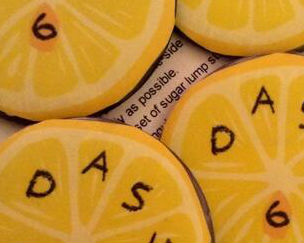
DASH "sugar lump"As previously discussed, the Saturday after next will see the sixth DASH puzzle hunt take place in London and in a dozen cities across the US. We don’t know much about it, though this Tweet from a team running the playtest in Portland inspires the above picture and gets us thinking about “sugar lumps”. Hmm.

The DASH Facebook page has also been running a series of previews of local co-ordinators. Dan Egnor, who has forgotten more about puzzle hunts than I have ever known, has said on Google Plus “This is so gonna be in a puzzle…” – it’s not really the DASH way to feature pre-clues, but there’s always a first time, and nobody ever said “This is not a clue” – so perhaps, just perhaps, never a truer word spoken in jest.

The great scholarly work of puzzle hunt puzzle taxonomy is Joe DeVincentis’ MIT Mystery Hunt Puzzle Index. If ever you want to astound people with the breadth of what can be achieved in a puzzle, that categorises over eighteen hundred of the hardest. In a similar vein – though I must admit insufficient familiarity to be able to use the same categories as Joe – I have attempted a similar analysis on the puzzles of the first five DASH events to date:

2009 Palo Alto: music (identification from audio samples), letter links
2009 Boston: picture identification, poker, indexing
2009 Los Angeles: phonetic letters and numbers (NV = envy or single letters), indexing
2009 Washington DC: poker, indexing, reading vertically
2009 Houston: physical puzzle, paper dolls, logic puzzle based on elimination
2009 Portland: picture identification, westerns, Morse
2009 Seattle: crossword clues, overlapping words, reading last letters
2009 Palo Alto: wordplay induction to deduce hidden rules (sports teams, phonetic letters, A=1 B=2, double letters, phonetic alphabet, identify countries, palindromes)
2009 Meta 1: rock scissors paper, wordplay from puzzle names and answers
2009 Meta 2: semaphore, rock scissors paper, wordplay from puzzle names and answers
2010 Alvin and the Chipmunks: music (identification from audio samples), word rebus
2010 The Brady Bunch: identification of pictures, induction of common themes, sorting, indexing
2010 CSI: Orlando: identification of pictures, Disney movies, sorting, indexing
2010 Late Night with Conan O’Brien: identification of pictures, TV shows, hidden words within quotes, extraction of extraneous letters
2010 Dancing with the Stars: soundalike gibberish, constellations, combining pictures to spell letters
2010 How I Met Your Mother: wordplay linking pick-up lines and logos, braille
2010 LOST: crossword clues, sorting logos based on colour clues, indexing
2010 Star Trek: identification of characters, bases other than ten, arithmetic applied to letter numbers
2010 Twilight Zone (Meta): mapping phrases within answers to buttons on remote control, mapping data to lines to letters, using one physical prop on another built up during the hunt
2011 Snow White: Snow White character names, hidden words within quotes
2011 The Town Musicians of Bremen: music (identification from audio samples), dot-to-dot lines travel over letters
2011 Cinderella: creation of physical prop, recognising physical prop’s ability, identifying common letters in pairs of words
2011 Rumpelstiltskin: trivia questions, picture rebuses, recognising letter shapes
2011 Rapunzel: creation of physical prop, pattern matching, arithmetic applied to letter numbers
2011 Chicken Little: wordplay induction to deduce hidden rules, letter binary code, identifying letter patterns in grid
2011 Hansel and Gretel: wordsearch (slight variant), letters not used in wordsearch, wordplay induction to deduce hidden instruction
2011 Jack and the Beanstalk: creation of physical prop, wordplay induction to deduce hidden crossword clues, crossword clues, word rebus
2011 Three Little Pigs: number logic puzzle, crossword clues, induction of common theme
2011 Meta Puzzle: wordplay induction on previous answers, crossword clues, jigsaw, maze, symbol identification, indexing
2012 Golden Gate Bridge: crossword clues, identification of states, dot-to-dot lines travel over letters, letters not used in grid
2012 Mausoleum At Halicarnassus: wordplay induction to deduce hidden instruction, binary decoding, semaphore
2012 Temple of Apollo at Delphi: crossword clues, triple homophones, indexing
2012 Great Wall of China: identification of pictures, wordplay induction to deduce hidden instruction
2012 Lighthouse At Alexandria: geometry, wordplay induction to deduce hidden instruction, counting
2012 Great Pyramid of Giza: crossword clues, wordplay induction to discover hidden instruction for filling crossword, use of hidden instruction on diagram provided
2012 Statue of Liberty: anagrams, wordplay induction to discover hidden instruction, use of hidden instruction on diagram provided
2012 Tower of Babel: crossword clues, flavourtext induction to discover hidden instruction, rhymes
2012 El Castillo (Meta): creation of physical prop, wordplay induction to discover hidden instruction
2013 Verify the Disorder: sequence dialogue, hidden quotes, foods and words within dialogue, matching to diagrams, recognising letter shapes, dot-to-dot lines travel over letters
2013 Identify the Affected Area: crossword clues, wordplay induction to discover hidden instruction
2013 Discover the Infection: puns, anagrams plus extraneous letters
2013 Find Patient Zero: hidden connections, binary code
2013 Isolate the Infection: mini-puzzles, crossword clues, cryptic crossword clues, hidden words within quotes, anagrams
2013 Determine Transmission: crossword clues, overlapping words, use of physical prop
2013 Develop a Cure: identify pictures, wordplay induction to discover hidden instruction
2013 Plan Distribution Method: identify grid positions, flavourtext induction to discover hidden instructions
2013 Complete the Cure (Meta): wordplay induction on previous answers, creation of physical prop, jigsaw, hidden message

So what can we learn?

  1. DASH is pretty wordplay-heavy compared to many other puzzle hunts, and there have been relatively many “interpret the flavourtext, or the answers, or other wordplay in order to deduce hidden instruction” puzzles over the years.
  2. Common tropes: extracting unused letters from words or anagrams, wordsearches where the unused letters in the grid are somehow crucial, dot-to-dots where things crossed by the lines are crucial, identifying words hidden within phrases or longer pieces of text. The theming is normally pretty important, too. To be fair, none of these are particularly exclusive to DASH.
  3. The meta puzzle often relies on some commonality between the answers, so a really smart team might be able to start to identify that commonality even before they have all the answers, then presume the existence of the commonality in the answers that they have not yet reached. We haven’t had a meta that’s in part to do with the puzzle names for a while, so perhaps that might turn up again before too long.
  4. Some of the earlier DASHes relied fairly heavily on US culture, which I think was dialed down a little for DASH 5 now that the UK has entered the fold – and, given that there’s no reason why it couldn’t spread further around the (at least the English-speaking or English-speaking expat) world, this might decrease further still over time. I get the impression that one concession for London in DASH 5 is that we were presented with a list of US postal state abbreviations that we might not be expected to know but that US solvers might – and if there are any counterparts for further DASHes (lists of state capitols? Lists of Presidents and their numbering?) don’t expect them to be red herrings.
  5. Looking at the scoring, DASH 3 was unusually long compared to the others, with particularly many physical prop construction puzzles that slowed teams down. Another relatively long one may roll round again at some point.
  6. It’s not at all an admission of defeat to take hints; the median teams may or may not take hints, but taking a hint will not necessarily exclude your team from finishing in the top 20% of all teams, or maybe even significantly higher than that – particularly if you’re fast everywhere else in a relatively long year.

Really looking forward to this year’s event, not least to getting to see lots and lots of lovely people in the same place at the same time, even more than at a Puzzled Pint. More on that soon!

Around the World: the South of the US

Map of the South of the USAround The World is an occasional series in which we release the general restriction that this is a site that focuses upon the UK and Ireland.

To untrained eyes, above you have a map of what might look like the south-east of the United States of America. To someone fortunate enough to have married a good woman from the state of Georgia, it’s very much the capital-S South.

Coming up this weekend, in Auburn in the state of Alabama, Eric Harshbarger will be hosting his fourteenth puzzle party, featuring a 16-hour 12-team puzzle hunt on Saturday 12th April – and the first two hours of Sunday 13th! This is the first time he will be permitting remote players; apparently one of the players will be from the UK, though I don’t recognise any names. You might be able to contact Eric to try to participate remotely on a team, particularly if you do recognise a name.

Later, in Atlanta in the state of Georgia, The Game will take place on the afternoon of Saturday 10th May. This team-based hunt, by Out of Hand Theater, sees teams attempt to travel to locations and score points by solving as many puzzles as possible within three hours. One neat twist is that teams solving sufficiently many clues qualify for The Genius Round, where they can attempt to win the grand prize.

Humorist Dave Barry has been organising one-day in-person puzzle hunts for thirty years. From 1984, they were published in Tropic, the Sunday magazine of the Miami Herald newspaper and accordingly known as “the Tropic Hunt”. Tropic magazine closed in 1998, but the Herald restarted the tradition as “the Herald Hunt” in 2001, and most years have seen a hunt since. There wasn’t one in 2013, and no date has been announced in 2014, but since 2008, Barry has organised the Post Hunt, published in the Washington Post, in Washington, DC. A mere five or ten thousand hunters are expected for the next event on Sunday 1st June. Andy Wenzel’s archives are the best place to look for information.

Further afield, Ravenchase Adventures run hunts all over the South. Some of them are walking events entitled “Pubs and Puzzles races”, others are the A.R.K. Hunts where the A.R.K. refers to the Act of Random Kindness that must be paid as the entry fee, and many more. The highlights include the annual Great Virginia Race, whose ninth edition is on the weekend of 24th-25th May, and the third annual Great America Race. This latter event is among the most ambitious of them all; lasting 5-8 days, teams can expect to have a hunt to solve in a different city each day, often with a drive from state to state in between. I loved this travelogue with an account of the 2013 event!

Lastly, for tribal reasons as well as for temporal ones, the University of South Carolina have run their own puzzle hunt in each of the last three years. Puzzles and metapuzzles are released each day, with an intricate system of puzzle answers clueing higher-level puzzles and so on. The event starts in late March each year and the puzzles from the just-finished 2014 edition have been published.

DASH 6 in London… and across the US!

DASH 6 lemon logoThe sixth DASH puzzle hunt will happen in London from 10 a.m. on Saturday 26th April. DASH stands for “Different Areas, Same Hunt”; part of the attraction is that the same event will also be run in 12 cities across the United States on the same day, so competition is global. Registration is open, but will close soon to permit one big printing run. There are a limited number of slots left and no guarantee that registration won’t close before they’re all filled, so don’t delay.

Teams of 3-5 players solve 8-10 puzzles as quickly as possible over the course of, probably, 5-7 hours. You walk from puzzle location to location, enjoying the journey and hopefully the weather. The travel is not timed, so you can take whatever comfort breaks, meals and other pauses you like between puzzles. The cost in London is, as last year, £25 per team.

One new feature this year is that each team is required to bring a smartphone running either iOS 7 or recent Android; much of the administration will be performed by a new app called ClueKeeper. Bring your own pencils, scissors, tape, Enigma machines and so on, too.

DASH has historically tended to concentrate on word and picture puzzles, rather than logic puzzles, with a focus on pattern recognition and some codebreaking here and there along the way. I bet there’ll be a metapuzzle to tie everything together at the end; last year had a simple but flavoursome story that ran through the event very effectively, too. Take a look at past years’ puzzles from DASHes 5, 4, 3, 2 and 1 to get a feel for the form and difficulty level.

DASH tries very hard to be accessible and family-friendly:

  • It’s possible to register for Easier Puzzles at the very start of the hunt;
  • Very funkily, it’s even possible to register for “DASH Junior” puzzles, intended to be solved by a team of (probably 10-16-year-old) kids accompanied around the course by a non-solving chaperone;
  • It’s made clear that it’s always possible to take hints on each puzzle if they’re required, and there’s never a worse punishment than a missed scoring opportunity for not solving a puzzle;
  • The puzzles are often designed so that everybody in the team should be able to contribute to each puzzle, because feeling “we solved this together between us” is fun;
  • In practice, there really is an ethos of offering as many hints as are required in order to get people through as many puzzles as possible and making sure people are having fun at all times.

Last year’s event was superb; I wrote about it at length at the time. One of my teammates also wrote an account, with gorgeous pictures, in two parts. More information at the London Twitter feed, or send questions to the London organisers. Fingers crossed that I get to see many of you there in less than four weeks!